
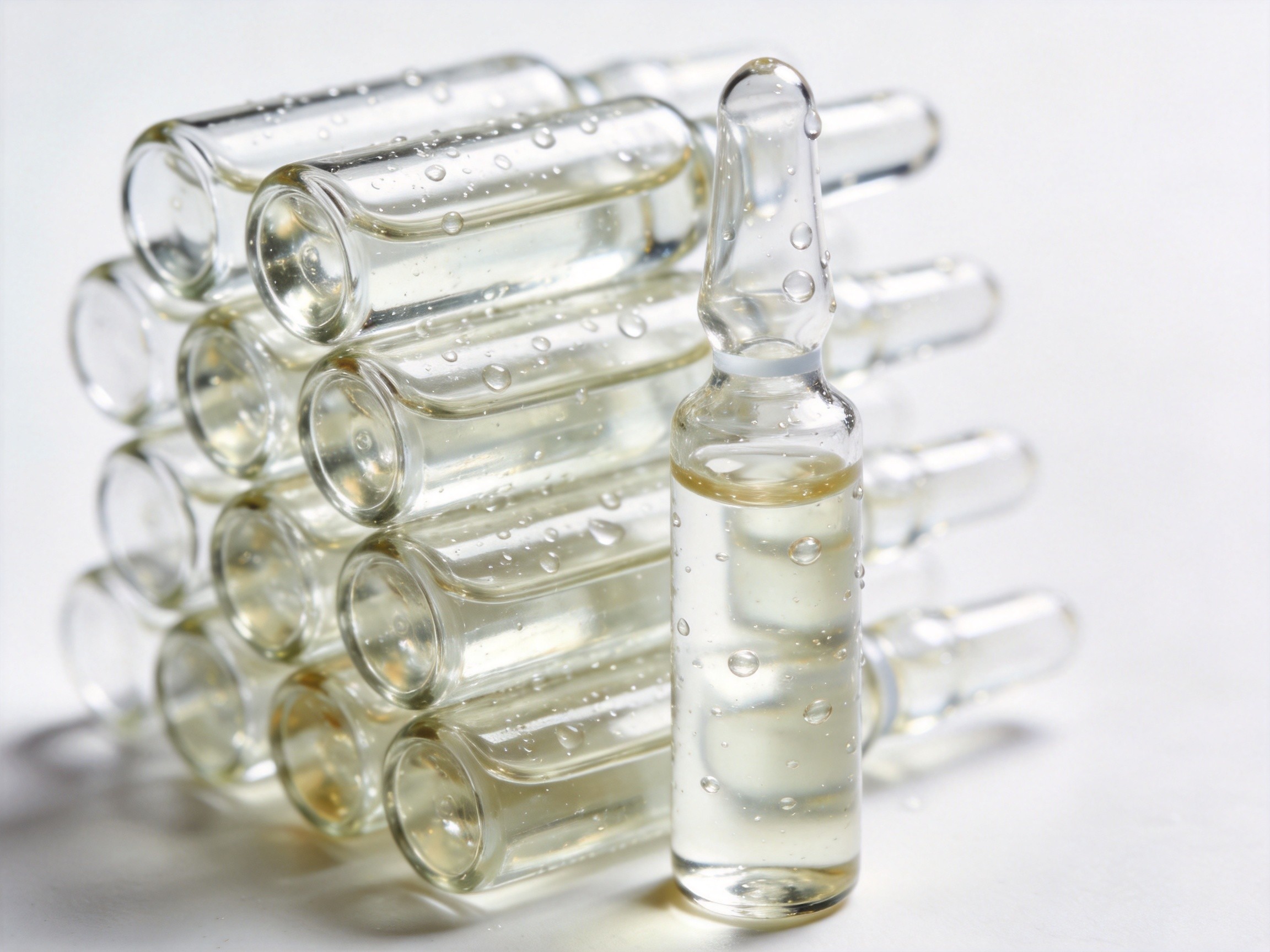
If your private-label buyers are asking about "peptide serums," they almost always mean one of three ingredients: Acetyl Hexapeptide-8 (the expression-line peptide sold under the trade name Argireline), Palmitoyl Pentapeptide-4 (the collagen-signaling peptide sold under the trade name Matrixyl), or Copper Tripeptide-1 (the blue copper carrier peptide, GHK-Cu).
This guide explains what each one actually is, how the peptides differ from one another, what use levels and formats are realistic, how they must be named on the label, and where the cosmetic compliance line sits. It is written for brand owners, importers, and product managers who want to build a credible peptide line rather than a "peptide complex" sticker.
The 30-second answer
A cosmetic peptide is a short synthetic chain of amino acids used as a biological signal on skin. The peptides you will actually meet on ingredient lists fall into a few working classes:
• Acetyl Hexapeptide-8 is a neurotransmitter-signaling peptide. It modestly softens the appearance of dynamic expression lines (forehead, crow's feet, between the brows) with continued use. It is not an injected neuromodulator and does not paralyze muscle.
• Palmitoyl Pentapeptide-4 is a signal peptide (a "matrikine"). It tells fibroblasts to support the look of collagen, firmness, and smoothness over weeks.
• Copper Tripeptide-1 is a carrier peptide that delivers a buffered trace of copper, used for the appearance of remodeling, firmness, and post-treatment recovery. It carries a natural blue-green color and has specific formulation rules.
All three are topical cosmetic ingredients. They work gently and gradually, are largely limited by how well they cross the stratum corneum, and must be described with appearance language. A finished product often combines two classes, but the label must name the actual INCI ingredients rather than a generic "peptide complex."
Why brands should care about peptides in 2026
Peptides are one of the few anti-aging categories where the marketing story and the underlying biochemistry genuinely overlap. Unlike a trend built on a single viral post, these ingredients have been in cosmetic commerce for more than twenty years: Acetyl Hexapeptide-8 has been used since 2001, Palmitoyl Pentapeptide-4 since the early 2000s, and the GHK copper complex was first described in the 1970s.
Consumer interest has accelerated sharply as short-form video positioned Acetyl Hexapeptide-8 as an at-home, needle-free option for expression lines. That visibility is an opportunity for an export brand, but it is also a compliance risk: the more a product is marketed as a "Botox alternative," the closer it gets to claims a topical cosmetic cannot legally make. The winning products lean on the science, position the benefit as modest and gradual, and avoid injection or paralysis language entirely.
The four working classes of cosmetic peptides
The most widely cited way to organize topical peptides (popularized in cosmetic-dermatology reviews) divides them by their primary mechanism. Understanding these classes matters because they do different jobs and are not interchangeable.
| Class | What it does | Best-known example | INCI name | | --- | --- | --- | --- | | Signal peptides | Tell fibroblasts to support collagen and matrix | Matrixyl | Palmitoyl Pentapeptide-4 | | Carrier peptides | Deliver a trace element (usually copper) | GHK-Cu | Copper Tripeptide-1 | | Neurotransmitter-signaling peptides | Soften the appearance of expression lines | Argireline | Acetyl Hexapeptide-8 | | Enzyme-inhibitor peptides | Reduce the breakdown of matrix proteins | Soy/rice peptides | various |
Many finished peptides act through more than one pathway, and a well-designed serum will deliberately combine a signal peptide with a carrier or a neurotransmitter-signaling peptide. But a product that lists only "peptide complex" with no named sequence tells the buyer nothing about which class they are purchasing — and it is a common way to underdose an expensive ingredient while charging a premium.
Acetyl Hexapeptide-8: the expression-line peptide
What it is. Acetyl Hexapeptide-8 is a synthetic chain of six amino acids with the sequence Ac-Glu-Glu-Met-Gln-Arg-Arg-NH2. It was developed by Lipotec (now part of Lubrizol) and sold under the trade name Argireline. It has a molecular weight of roughly 889 Da and is fully water-soluble. Older labels and literature sometimes call it Acetyl Hexapeptide-3; the two names refer to the same molecule, and the correct current INCI name is Acetyl Hexapeptide-8.
How it is described to work. The sequence mimics a short fragment of SNAP-25, one of the proteins that forms the SNARE complex responsible for releasing the neurotransmitter acetylcholine at the nerve-to-muscle junction. By competing for a position in that complex, the peptide is described as modestly reducing the efficiency of neurotransmitter release, which attenuates the intensity of the small facial contractions that etch dynamic lines. The effect is reversible and wears off when use stops; the peptide has no enzymatic activity and does not cleave proteins.
Why it is not an injection. An injected botulinum-toxin product is a prescription treatment that physically reaches the muscle and enzymatically blocks the signal for months. Acetyl Hexapeptide-8 is a topical cosmetic that does not reach the muscle, is far milder, and produces only a gradual softening of the appearance of lines. Independent penetration studies have found that only a very small fraction of an applied dose even crosses the stratum corneum, with most of the dose remaining on the surface. No cosmetic should be described as a replacement for, or equivalent to, an injectable treatment.
What it is good for, and not. This peptide targets dynamic, repetitive expression lines — forehead lines, crow's feet, and the line between the brows. It does not resurface static, sun-aged lines the way a retinoid or an exfoliating acid can. A credible formula pairs it with a remodeling or hydrating active rather than positioning it as a standalone fix for all signs of aging.
Realistic use level. The ingredient is commonly supplied as a dilute aqueous solution (around 0.05% to 0.1% peptide), which is added to a finished product at roughly 3% to 10% of the formula. That translates to only a few to tens of ppm of pure peptide, which is the range in which the molecule is used. Loading more does not improve the effect and only raises cost.
Palmitoyl Pentapeptide-4: the collagen signal
What it is. Palmitoyl Pentapeptide-4 is a synthetic five-amino-acid peptide (Lys-Thr-Thr-Lys-Ser) with a palmitoyl lipid tail attached. It was developed by Sederma (now part of BASF Beauty Care Solutions) and sold under the trade name Matrixyl. The palmitoyl tail is essential: it increases the molecule's lipophilicity so it can enter the lipid-rich stratum corneum, which the bare, water-soluble peptide could not cross effectively.
How it is described to work. The peptide functions as a matrikine — a fragment that resembles a piece of type I procollagen. When matrix proteins are naturally broken down, such fragments act as "repair" signals to fibroblasts. Synthetic Palmitoyl Pentapeptide-4 mimics that signal and is described as converging with TGF-beta-like pathways, supporting the look of collagen (types I, III, and IV), fibronectin, and hyaluronic acid. Because it is a signal rather than a growth factor itself, it does not carry the inflammatory effects of applying TGF-beta directly.
Matrixyl vs the blends. Trade names can be confusing. The original Matrixyl is Palmitoyl Pentapeptide-4 alone. Later branded blends combine it with other peptides; for example, a well-known blend pairs it with Palmitoyl Tetrapeptide-7, which addresses a different, anti-glycation and calming pathway. For an export brand, the ingredient list — not the marketing name — is what tells the buyer and the regulator what is actually in the bottle.
Realistic use level. The peptide is effective at remarkably low concentrations. Published clinical work has used levels in the low ppm, and most commercial formulas fall in the ppm to low-hundred-ppm range of active peptide (often added as a branded ingredient solution). Higher loading does not produce a proportional benefit above a threshold. Visible appearance changes are typically described after 4 to 12 weeks of consistent use.
Copper Tripeptide-1: the copper carrier
What it is. Copper Tripeptide-1 is the copper(II) complex of the tripeptide glycyl-histidyl-lysine (GHK), first isolated from human plasma by Loren Pickart in 1973. The peptide binds copper with high affinity and delivers it in a buffered, controlled way. It is supplied as a characteristic blue-green powder or solution. (It may also appear in supplier or registry contexts under names such as prezatide copper, but the consumer-facing INCI name is Copper Tripeptide-1.)
How it is described to work. Because copper is a cofactor for enzymes involved in remodeling and antioxidant defense (including superoxide dismutase), the carrier peptide is described as supporting several appearance pathways at once: the look of collagen, elastin, and glycosaminoglycans; antioxidant support; a calm, comfortable feel; and post-treatment recovery. It has one of the largest research bases in the carrier-peptide category, and strong consumer recognition in premium North American and European skincare as the "blue copper peptide."
Where it is used. It is positioned in remodeling and firming serums, post-procedure care, mature-skin treatments, eye gels, and scalp and hair-care products. As with the other peptides, claims must stay at the level of appearance and feel.
Realistic use level. Finished products typically use Copper Tripeptide-1 in the low-ppm to around 0.1% range of active complex, depending on whether the supplier quotes the concentrated complex or a diluted solution. Some premium consumer products use "1%" as a brand-positioning number, but concentration alone does not determine bioavailability; the delivery system and skin tolerance matter just as much.
Formulation rules that protect peptide activity
Peptides are forgiving ingredients compared with many actives, but a few non-negotiable rules determine whether a product actually works.
Add cold, in the cool-down phase. All three peptides should be added after emulsification and after the base has cooled below roughly 40°C (104°F). Peptides are susceptible to hydrolysis and deamidation at high temperature and extreme pH.
Stay in the right pH window. Acetyl Hexapeptide-8 and the palmitoyl peptides are generally stable across the normal cosmetic range, roughly pH 5 to 7. Copper Tripeptide-1 is best held around pH 5 to 7 (optimal near 5.5 to 6.5); below about pH 4.5 the copper complex can dissociate, while strongly alkaline conditions can cause copper precipitation.
Mind the copper-specific incompatibilities. Copper Tripeptide-1 needs extra care:
• Strong chelators such as EDTA can bind the copper and break the complex.
• High-concentration, low-pH vitamin C (L-ascorbic acid) can degrade the complex.
• Strong, low-pH AHA/BHA systems should be avoided in the same step without dedicated stability data.
• Copper peptides are generally compatible with hyaluronic acid, niacinamide, panthenol, and standard moisturizing ingredients.
This is why many brands recommend applying a copper peptide in a separate layer or at a different time of day from direct vitamin C or strong acids. It is a chemistry issue, not a marketing gimmick.
Package for protection. Peptide serums, especially copper products, benefit from airless or opaque packaging that limits oxidation and light exposure. The blue-green hue of a copper formula is normal; a shift toward brown over shelf life can signal oxidation and should be checked in stability testing.
Support delivery. Because these molecules are relatively large and hydrophilic (the palmitoyl and copper peptides partly address this), formulas often use humectants, low-viscosity serums, liposomes, or other delivery systems to improve surface residence and penetration. Pairing a neurotransmitter-signaling peptide with glycerin or hyaluronic acid gives an immediate smoothing feel while the peptide works over weeks.
What a private-label peptide line can include
An OEM partner can build a coherent, multi-format range around these ingredients. Common export-ready formats include:
• Expression-line serum built around Acetyl Hexapeptide-8, positioned for forehead and eye-area appearance.
• Eye gel or eye cream combining Acetyl Hexapeptide-8 with hydrating and firming actives for the delicate periorbital area.
• Firming and smoothing serum built around Palmitoyl Pentapeptide-4, alone or in a peptide blend.
• Remodeling or "blue copper" serum built around Copper Tripeptide-1, with appropriate airless packaging.
• Post-treatment recovery care using Copper Tripeptide-1 at a gentle level for a calm, comfortable look after cosmetic procedures.
• Peptide-rich moisturizer that stacks a signal peptide with a carrier peptide in one anti-aging cream.
• Scalp and hair-care serum using Copper Tripeptide-1 for the appearance of scalp vitality and hair density.
• Multi-peptide ampoule or course set combining classes in a higher-margin, giftable format.
A well-structured range usually leads with one hero serum per class, then offers a combined product and a supporting cream, giving buyers a clear upgrade path without redundant SKUs.
Labeling, trade names, and what you can and cannot say
Use the INCI name. The ingredient deck must list the actual names — Acetyl Hexapeptide-8, Palmitoyl Pentapeptide-4, Copper Tripeptide-1 — not just "peptide complex." Trade names such as Argireline, Matrixyl, and related branded blends are the property of their suppliers and should be used in marketing only under the appropriate terms, if at all. For most private-label brands, building the story around the INCI ingredient is cleaner and avoids trademark dependence.
Stay with appearance claims. Approved-style wording describes what the skin looks and feels like: helps reduce the appearance of fine lines and expression wrinkles, supports a smoother, firmer, more refreshed look, and improves the feel of texture and hydration over time. Results should be framed as gradual and dependent on consistent use.
Do not cross into treatment language. Do not claim that a peptide serum relaxes or paralyzes muscle, replaces an injectable treatment, works like a prescription neuromodulator, treats a skin condition, or produces a medical effect. Those are drug or medical-device claims, not cosmetic ones, regardless of how the product is sold online.
How to choose a peptide manufacturer
When evaluating an OEM/ODM partner for a peptide line, look beyond unit price:
• Can they supply the named INCI ingredients with certificates of analysis that confirm identity (ideally by mass spectrometry) and purity, rather than an unspecified "peptide complex"?
• Do they understand cool-down processing, pH control, and the copper-specific incompatibilities with chelators and vitamin C?
• Can they provide airless or opaque packaging and supporting stability data for a copper formula's color?
• Do they review claims and packaging to keep products within cosmetic compliance in your target markets?
• Can they support low-MOQ hero SKUs while leaving room to expand into a multi-format range?
A manufacturer that can document all of the above protects both your brand and your retailer relationships.
Frequently asked questions
Is Acetyl Hexapeptide-8 the same as Botox? No. Acetyl Hexapeptide-8 is a topical cosmetic peptide that modestly softens the appearance of expression lines with continued use. It does not reach or paralyze the muscle the way an injected prescription treatment does, and its effect is milder and reversible. It should be marketed as a cosmetic appearance benefit, never as an equivalent to an injection.
What is the difference between Matrixyl and Palmitoyl Pentapeptide-4? Matrixyl is the original trade name; Palmitoyl Pentapeptide-4 is the INCI ingredient name. Later branded "peptide blends" may combine it with other peptides, so the ingredient list is the reliable way to know exactly what a product contains.
Does copper peptide turn the product blue? Yes — Copper Tripeptide-1 naturally carries a blue-green color, which is normal and not a sign of a problem. A shift toward brown over the shelf life can indicate oxidation, which is why stability testing and airless or opaque packaging are recommended.
Can I combine copper peptides with vitamin C or retinol? Copper Tripeptide-1 should generally be kept away from high-strength, low-pH vitamin C and strong chelators such as EDTA in the same step, because they can disrupt the copper complex. Peptides and retinoids can be used together or on separate routines; when in doubt, layer them at different times or ask your formulator. Signal and expression-line peptides are more flexible, but strong acidic systems still warrant stability testing.
How long until buyers see results? Peptides work gradually. Appearance benefits are generally described after several weeks of consistent use, with firmer, smoother-looking results often reported over 6 to 12 weeks. Realistic positioning and consistent-use guidance build more trust than promises of immediate, dramatic change.
Can one serum combine all three peptides? It is possible to combine classes, and many credible products pair a signal peptide with a carrier or expression-line peptide. However, copper peptides bring specific pH, chelator, and packaging constraints, so a multi-peptide formula should be designed and stability-tested by an experienced formulator rather than simply blended at the bench.
Start building your peptide line
Peptides are a rare combination of real science, strong consumer demand, and credible, long-term use — which makes them an excellent anchor for a private-label anti-aging range. The key is to name the actual INCI ingredients, choose the right class for each claim, respect the formulation and packaging rules (especially for copper), and keep the messaging at the cosmetic-appearance level.
If you are an export brand, importer, or distributor planning a peptide serum, eye product, firming cream, or multi-peptide set, we can help you select ingredients, define formats and use levels, and arrange compliant private-label manufacturing with documentation. Send us your target format, market, and order quantity, and our team will come back with a practical proposal.